Reach a whole grade
More students can receive a guided, individualized discovery process—not just those who seek out the counseling office.
Solutions
Students explore. Counselors advise with context. Schools can scale career exploration. Here's what Campus Match does for each.
For students
You don't need to know a career title, a major name, or the right search filter. Talk about what you like, what you're good at, and what you'd rather avoid. Campus Match asks follow-up questions, shows you careers to react to, and helps you narrow things down to a few concrete directions worth exploring.
For counselors
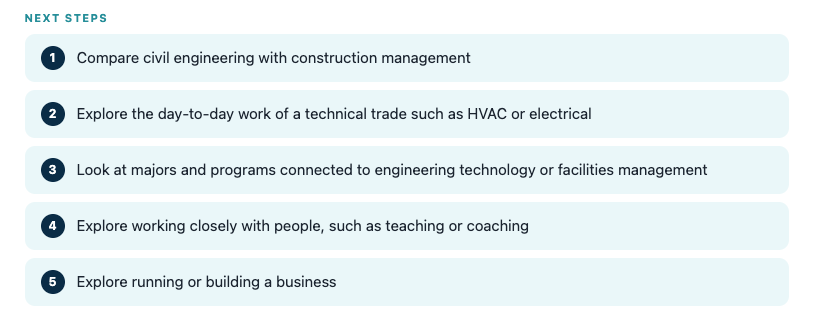
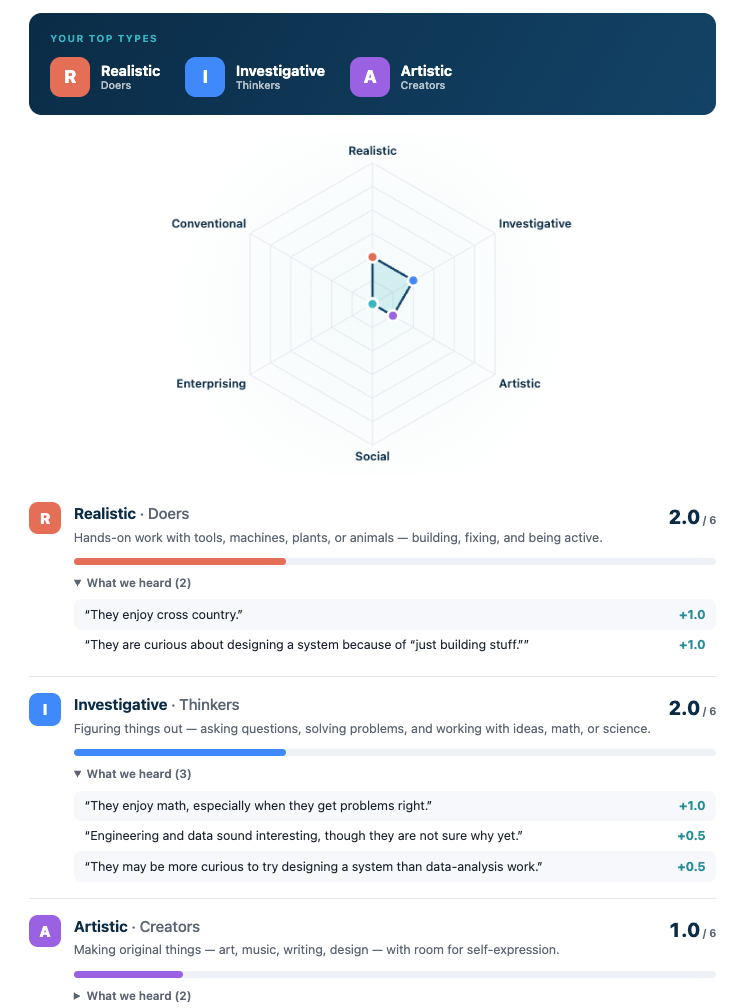
Campus Match does more of the discovery work itself, so students can make meaningful progress independently, even when one-on-one counselor time is limited. The counselor dashboard shows each student's interests, career exploration, and emerging direction. When you do have time with a student, you can spend it on clarification and decisions instead of starting from zero.
Campus Match supports counselors. It does not replace them.
For school & district leaders
Give every student in a grade a structured, individualized start on career exploration, including college and career readiness and CTE exploration, without adding a one-on-one meeting for each one.
More students can receive a guided, individualized discovery process—not just those who seek out the counseling office.
Start with one counselor-led class period, using a lesson plan and slides we provide. No curriculum overhaul or long technical rollout.
Students can make meaningful progress independently, so limited one-on-one counselor time can go to clarification and decisions.
See which students have explored, and what careers and pathways they're interested in.
A separate safety system can flag serious concerns, and authorized school personnel review escalations.
We're measuring outcomes in real school settings and will share results when there's enough data.
See what we're measuringWe'll walk through the student experience, the counselor dashboard, and a first class period.